Secret Life of Predators Stealth hd
Labels:
Animal
Wild America The Wild Yellowstone Scavengers
DESCRIPTION :
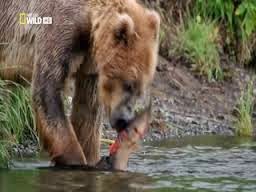
Scavengers in the Yellowstone, home to over 400 species, can gorge on nearly 40 tons of rotting elk during harsh winters. It's a dirty job, but someone's got to be nature's janitors. Casey is setting up a carcass stakeout to discover what happens to all the Yellowstone wildlife after death. Since turkey vultures can smell a carcass up to 12 miles away, he uses them to help him find animal carcasses to observe how they are devoured and by which ravenous creature.Secrets of the Sun Nova National Geographic Special Full
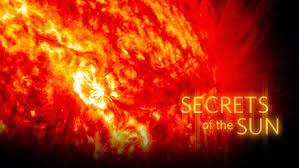
Secrets of the Sun Nova National Geographic Special Full
DESCRIPTION:
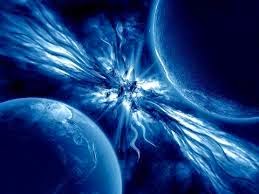
It contains 99.9 percent of all the matter in our solar system and sheds hot plasma at nearly a million miles an hour. The temperature at its core is a staggering 27 million degrees Fahrenheit. It convulses, it blazes, it sings. You know it as the sun. Scientists know it as one of the most amazing physics laboratories in the universe. Now, with the help of new spacecraft and Earth-based telescopes, scientists are seeing the sun as they never have before and even recreating what happens at its very center in labs here on Earth. Their work will help us understand aspects of the sun that have puzzled scientists for decades. But more critically, it may help us predict and track solar storms that have the power to zap our power grid, shut down telecommunications, and ground global air travel for days, weeks, or even longer. Such storms have happened before—but never in the modern era of satellite communication. "Secrets of the Sun" reveals a bright new dawn in our understanding of our nearest star—one that might help keep our planet from going dark.National Geographic Cosmic Monsters Part 1 of 4
National Geographic Cosmic Monsters Part 1 of 4
DESCRIPTION :
What begins as a star’s cataclysmic explosion in a violent supernova results in one of the most mysterious phenomena in our universe: a black hole. Black holes are the makings of science fiction, with fantasies of tunnel passageways that travel through space and time dominating the imagination. Nothing survives a black hole; it's gravitational pull twists space and time into a furious knot so strong that not even light can escape, making the likelihood of locating a passageway inside almost impossible. Are black holes a rare freak of nature or does the universe hide many of these mysterious phenomena? 125 billion galaxies make up the visible universe, with every major galaxy housing a black hole. Indeed, even our own Milky Way harbours a super-massive black hole, 50 million kilometres wide at the very centre of the galaxy. What role do black holes play in attracting matter together within the spider’s web of gas and galaxies? And, with their voracious appetites, what’s to prevent a black hole from wiping out solar systems like our own?National Geographic Cosmic Monsters Part 2 of 4
National Geographic Cosmic Monsters Part 2 of 4
DESCRIPTION
What begins as a star’s cataclysmic explosion in a violent supernova results in one of the most mysterious phenomena in our universe: a black hole. Black holes are the makings of science fiction, with fantasies of tunnel passageways that travel through space and time dominating the imagination. Nothing survives a black hole; it's gravitational pull twists space and time into a furious knot so strong that not even light can escape, making the likelihood of locating a passageway inside almost impossible. Are black holes a rare freak of nature or does the universe hide many of these mysterious phenomena? 125 billion galaxies make up the visible universe, with every major galaxy housing a black hole. Indeed, even our own Milky Way harbours a super-massive black hole, 50 million kilometres wide at the very centre of the galaxy. What role do black holes play in attracting matter together within the spider’s web of gas and galaxies? And, with their voracious appetites, what’s to prevent a black hole from wiping out solar systems like our own?National Geographic Cosmic Monsters Part 3 of 4
National Geographic Cosmic Monsters Part 3 of 4
DESCRIPTION :
What begins as a star’s cataclysmic explosion in a violent supernova results in one of the most mysterious phenomena in our universe: a black hole. Black holes are the makings of science fiction, with fantasies of tunnel passageways that travel through space and time dominating the imagination. Nothing survives a black hole; it's gravitational pull twists space and time into a furious knot so strong that not even light can escape, making the likelihood of locating a passageway inside almost impossible. Are black holes a rare freak of nature or does the universe hide many of these mysterious phenomena? 125 billion galaxies make up the visible universe, with every major galaxy housing a black hole. Indeed, even our own Milky Way harbours a super-massive black hole, 50 million kilometres wide at the very centre of the galaxy. What role do black holes play in attracting matter together within the spider’s web of gas and galaxies? And, with their voracious appetites, what’s to prevent a black hole from wiping out solar systems like our own?the fabric of the cosmos illustation of time
the fabric of the cosmos illustation of time
DESCRIPTION :
The Fabric of the Cosmos, a four-hour series based on the book by renowned physicist and author Brian Greene, takes us to the frontiers of physics to see how scientists are piecing together the most complete picture yet of space, time, and the universe.
With each step, audiences will discover that just beneath the surface of our everyday experience lies a world we'd hardly recognize - a startling world far stranger and more wondrous than anyone expected.
Brian Greene is going to let you in on a secret: We've all been deceived. Our perceptions of time and space have led us astray.
Much of what we thought we knew about our universe - that the past has already happened and the future is yet to be, that space is just an empty void, that our universe is the only universe that exists - just might be wrong.
Interweaving provocative theories, experiments, and stories with crystal-clear explanations and imaginative metaphors like those that defined the groundbreaking and highly acclaimed series The Elegant Universe, The Fabric of the Cosmos aims to be the most compelling, visual, and comprehensive picture of modern physics ever seen on television.National Geographic Cosmic Monsters Part 4 of 4
National Geographic Cosmic Monsters Part 4 of 4
DESCRIPTION :
What begins as a star’s cataclysmic explosion in a violent supernova results in one of the most mysterious phenomena in our universe: a black hole. Black holes are the makings of science fiction, with fantasies of tunnel passageways that travel through space and time dominating the imagination. Nothing survives a black hole; it's gravitational pull twists space and time into a furious knot so strong that not even light can escape, making the likelihood of locating a passageway inside almost impossible. Are black holes a rare freak of nature or does the universe hide many of these mysterious phenomena? 125 billion galaxies make up the visible universe, with every major galaxy housing a black hole. Indeed, even our own Milky Way harbours a super-massive black hole, 50 million kilometres wide at the very centre of the galaxy. What role do black holes play in attracting matter together within the spider’s web of gas and galaxies? And, with their voracious appetites, what’s to prevent a black hole from wiping out solar systems like our own?
National Geographic Cosmic Monsters HD
DESCRIPTION :
What begins as a star’s cataclysmic explosion in a violent supernova results in one of the most mysterious phenomena in our universe: a black hole. Black holes are the makings of science fiction, with fantasies of tunnel passageways that travel through space and time dominating the imagination. Nothing survives a black hole; it's gravitational pull twists space and time into a furious knot so strong that not even light can escape, making the likelihood of locating a passageway inside almost impossible. Are black holes a rare freak of nature or does the universe hide many of these mysterious phenomena? 125 billion galaxies make up the visible universe, with every major galaxy housing a black hole. Indeed, even our own Milky Way harbours a super-massive black hole, 50 million kilometres wide at the very centre of the galaxy. What role do black holes play in attracting matter together within the spider’s web of gas and galaxies? And, with their voracious appetites, what’s to prevent a black hole from wiping out solar systems like our own?
How Stuff Works Salt Discovery Channel - BBC Documentary 2014
DESCRIPTION :
Salt is salt, right? When you go to the grocery store to replenish your supply, you probably expect to see just a few varieties, like iodized salt (what most of us use as "table salt") and kosher salt (a coarse salt popular with chefs). But you might also find things like "sel gris" and "fleur de sel." Some gourmets claim that these salts taste different from iodized salt and give additional flavor to foods seasoned with them.
Even if you try not to use much salt, it's almost impossible to avoid it. There are five tastes that all people are able to experience -- bitter, sweet, sour, salty and umami (meaning "delicious and savory taste" in Japanese). Only "salty" is directly related to a substance that we need to consume in order for our bodies to function correctly. Because of this need, humans and animals have a built-in taste for salt.National Geographic | Glacier National Park - History channel - HD Documentary
National Geographic | Glacier National Park - History channel - HD Documentary
DESCRIPTION :
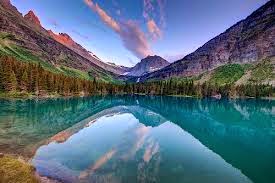
Le parc national de Glacier (Glacier National Park) est un parc national américain situé dans l'État américain du Montana. Fondé en 1910 et d'une superficie de 4 101 km2, il est bordé au nord par les provinces canadiennes de l'Alberta et de la Colombie-Britannique.
Le parc, qui est constitué de zones montagneuses abritant des dizaines de glaciers, des centaines de lacs et des milliers d'espèces animales et végétales, est l'un des écosystèmes les mieux préservés du pays. Il fait partie d'un écosystème protégé plus étendu (44 000 km2) nommé « Écosystème de la couronne du continent ». Avec le parc national canadien des Lacs-Waterton, il forme depuis 1932 le parc international de la paix Waterton-Glacier. Cette région composée de deux parcs a été désignée par l'UNESCO réserve de biosphère en 1976 et patrimoine mondial en 19954.
Le parc est parcouru par la célèbre route Going-to-the-Sun Road qui franchit le Continental Divide tout en permettant aux visiteurs d'entrer au cœur de forêts denses et de prairies alpines3. Cette route ainsi que cinq hôtels datant du début du xxe siècle sont classés National Historic Landmarks alors que 350 autres constructions font partie du registre national des lieux historiques.National Geographic | The Lives of Tigers - History channel - HD Documentary
National Geographic | The Lives of Tigers - History channel - HD Documentary
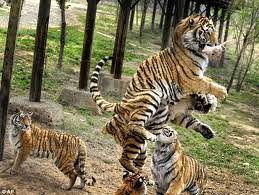
The life cycle of an animal refers to the stages through which the average specimen goes during the entire period that extends from its birth to its eventual death. Studying and knowing about an animal’s normal life cycle gives researchers and enthusiasts important insights and foundations on which to plan and base their efforts, particularly in the sphere of conservation.
Image of a tiger cub
Tiger cub (4 days)
At birth, the tiger weighs between 780 and 1 600 grams (averaging just over one kilogram) after a gestation period of about 3.5 months. They will stay hidden and protected in the comfy den that their mother prepared before their birth for the first eight weeks of their lives They are nursed by their mother who will gradually begin to introduce solids when the cubs are between six and eight weeks old.National Geographic | HD Documentary -Marijuana Drug - Documentary
National Geographic | HD Documentary -Marijuana Drug - Documentary
DESCRIPTION :
Cannabis, commonly known as marijuana and by numerous other names, is a preparation of the cannabis plant intended for use as a psychoactive drug and as medicine. Pharmacologically, the principal psychoactive constituent of cannabis is tetrahydrocannabinol (THC); it is one of 483 known compounds in the plant, including at least 84 other cannabinoids, such as cannabidiol (CBD), cannabinol (CBN), tetrahydrocannabivarin (THCV),] and cannabigerol (CBG).
Cannabis is often consumed for its psychoactive and physiological effects, which can include heightened mood or euphoria, relaxation, and an increase in appetite. Unwanted side-effects can sometimes include a decrease in short-term memory, dry mouth, impaired motor skills, reddening of the eyes, and feelings of paranoia or anxiety.National Geographic | Inside The McDonalds Empire- History channel - HD Documentary
National Geographic | Inside The McDonalds Empire- History channel - HD Documentary
Cal Quintanilla goes inside the McDonald's empire and show you how McDonald's went from a single drive-through to become the world's largest fast food restaurant chain serving around 68 million customers daily in 119 countriesNational Geographic | The Lost World of Atlantis - History channel - HD Documentary
National Geographic | The Lost World of Atlantis - History channel - HD Documentary
DESCRIPTION :
Around 350 BC, Plato wrote about a beautiful island in the Atlantic Ocean that went under the ocean waves in one day and one night. It took two books to describe the history and details of this almost magical island. For years people have been looking for this mysterious lost city, Atlantis. National Geographic | The Lives of Tortoises - History channel - HD Documentary

DESCRIPTION :
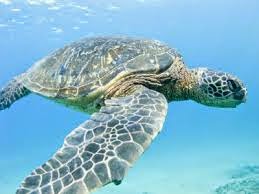
Tortoises are a family of land-dwelling turtles in the order Testudines. Contrary to popular belief, tortoises are in fact turtles rather than part of a separate group. Like most turtles, tortoises are shielded from predators by a shell. The top part of the shell is the carapace, the underside is the plastron, and the two are connected by the bridge. The carapace is fused to both the vertebrae and ribcage, and turtles are unique among vertebrates in that the pectoral and pelvic girdles are inside, rather than outside, the ribcage. Tortoises can vary in size from a few centimeters to two meters. They are usually diurnal animals with tendencies to be crepuscular depending on the ambient temperatures. They are generally reclusive animals.
National Geographic | The Life of Buddha - History channel - HD Documentary
DESCRIPTION :
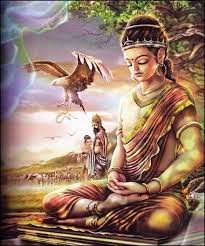
Gautama Buddha, the historical Buddha, lived between 563 and 483 BC in the area known now as the Indo-Nepalese region. As a bodhisattva, he had passed through thousands of existences before coming to Earth for his ultimate transmigration.
This last lifetime he began as a son of the King of the realm Sakya, Sudhodana, who ruled at Kapilavastu, in Ancient India on the border of present-day Nepal, and was born in a village called Lumbini into the warrior tribe called the Sakyas (from where he derived the title Sakyamuni, meaning "Sage of the Sakyas").
According to ancient tradition, Queen Maya, his mother, first had a dream of a beautiful white elephant coming down into her womb, and this was interpreted as a sign that the Buddha, or a universal emperor, was about to be born. When her time came, Queen Maya went into the garden and gave painless birth to the bodhisattva. He immediately walked, spoke, and was recei